




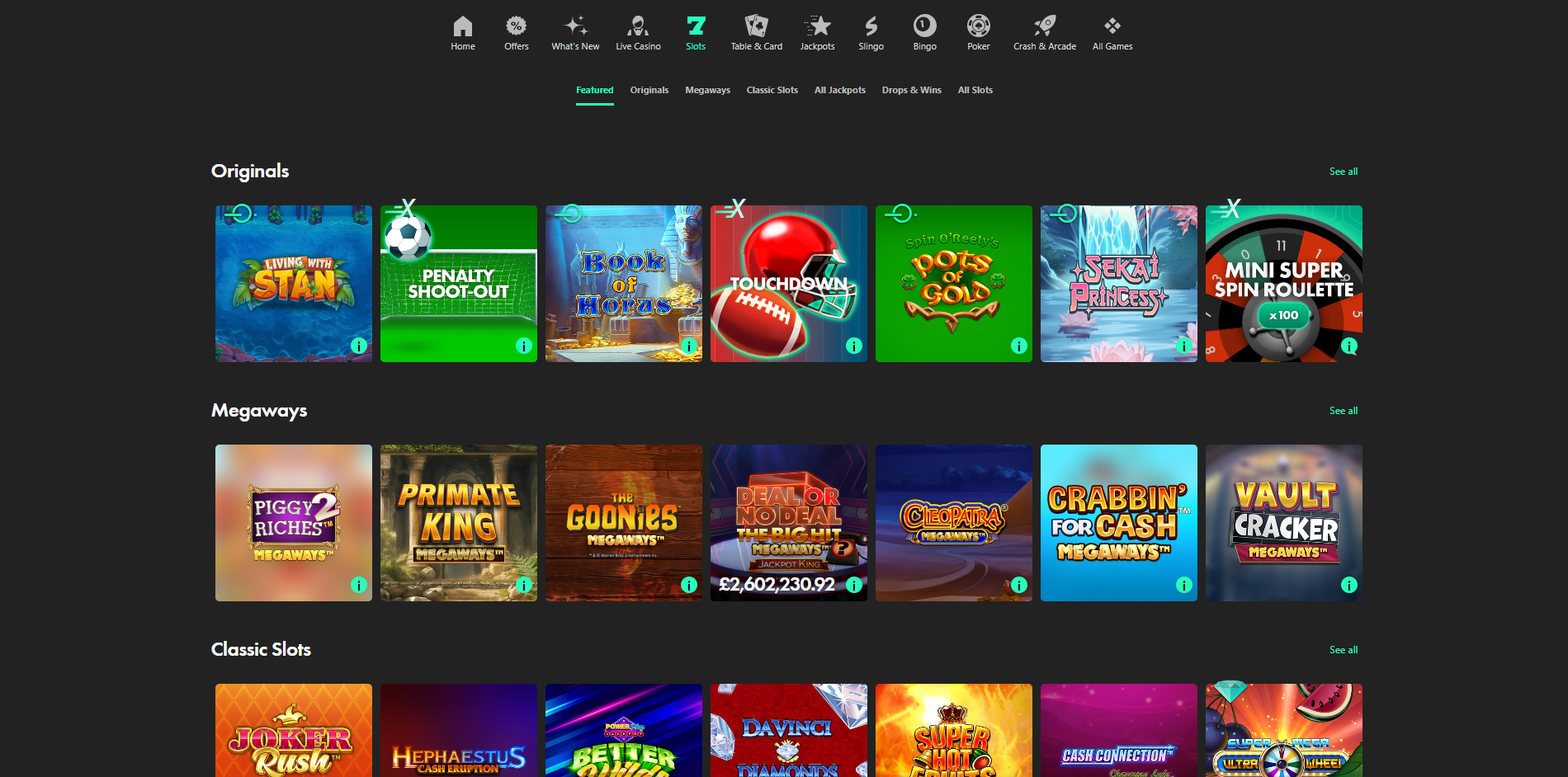
Behind every rotation of the roulette wheel and every deal of blackjack is a specialist studio that creates, produces, and updates the game https://velobetcasino.eu/. These companies are the casino game providers, and they shape far more of the playing experience than most people realise. A single online casino might feature titles from dozens of different studios, each with its own mathematical models, artistic style, and technical architecture. Understanding who builds the games helps players make more informed choices about where to invest their time and money. For anyone checking out a platform like VeloBet Casino, the roster of providers on display acts as a direct indicator of range, excellence, and trustworthiness. This article unpacks what game providers actually do, how they contrast, and why their presence counts when you assess an online casino.
Which Casino Game Providers Truly Do
Casino game providers are independent software studios that create the digital games found on gambling platforms. Their work covers everything from visual design and sound engineering to the underlying random number generator algorithms that decide outcomes. A single slot title can take a team of mathematicians, graphic artists, and sound designers over a year to create. The provider also handles certification, submitting each game to testing laboratories that check fairness and compliance with the regulatory standards of jurisdictions like the UK Gambling Commission. This certification process is mandatory and ensures the game’s advertised return-to-player percentage is accurate.
Once approved, the game gets packaged for integration into operator platforms, often through a single API connection that gives the casino access to an entire catalogue. That integration enables operators add dozens of titles without complex technical work. Providers also manage ongoing maintenance, bug fixes, and occasional feature updates to keep games running smoothly. In live casino, the workload expands further to include studio construction, camera rigs, trained dealers, and real-time streaming infrastructure that must function flawlessly across devices and connection speeds. The provider also has to handle dealer scheduling and compliance with broadcasting regulations.
The business model typically works on a revenue-share basis. The provider leases its games to the casino, and both parties earn a percentage of the gross gaming revenue generated by players. This creates a natural alignment of interests: providers only thrive when their games perform well over time, which drives them to build titles players actually want to come back to. The relationship also explains why casinos compete fiercely to secure exclusive or early-access deals with top-tier studios. A platform that can offer a new release from a sought-after provider two weeks before its competitors gains a tangible marketing edge. For the player, the takeaway is straightforward: a casino that lists respected providers is one that has passed the commercial and technical due diligence those studios require before they approve a partnership.
Mobile Performance and Cross-Device Performance
The shift to mobile play has altered how providers develop their games. A few years ago, a studio might develop a desktop version first and then transfer a stripped-down edition to mobile as an afterthought. That approach has become obsolete in a market where over half of all online casino sessions occur on phones and tablets. Modern providers design for mobile from the first wireframe, creating interfaces that function in portrait mode with thumb-friendly button placement and touch-optimised controls. The technical challenge is considerable: a slot game must load fast on a 4G connection, run smoothly on a screen that might be five or six inches across, and still provide the same audiovisual impact that the desktop version offers on a large monitor.
HTML5 has become the universal standard, taking over from the older Flash technology that Apple devices never supported. Any provider still keeping Flash-based games is effectively irrelevant to the modern market. The best studios go further by creating adaptive streaming for live casino, automatically adjusting video quality based on the player’s connection speed to stop buffering during critical moments. They also test extensively across device fragmentation, ensuring that a game runs identically on a three-year-old Android handset and the latest iPhone. For players, this implies the provider list on a casino’s homepage holds practical implications. A lobby populated by studios known for excellent mobile craftsmanship will provide a noticeably smoother experience during a commute or a lunch break than one packed with older titles that were never optimized for handheld play.
In what manner Live Casino Providers Create the Production Experience

Live casino is the fastest-growing segment of online gambling, and its quality hinges on the provider running the studio. Unlike slots and table games, which operate on pre-programmed software, live games stream from purpose-built facilities where real dealers operate real equipment in real time. Evolution dominates this space so thoroughly that its name has become almost synonymous with the category, but competitors like Pragmatic Play Live and Playtech Live have invested heavily in their own studios across multiple jurisdictions. The provider is responsible for hiring and training dealers, servicing the physical tables, managing the cameras, and processing the video streams with latency low enough that players never feel separated from the action.
What separates a top-tier live provider from a mediocre one often comes down to the details of studio design and game variant innovation. The best operators develop multiple camera angles into each table, letting players toggle views and see the wheel or the shoe from different perspectives. They also develop proprietary game show-style titles that blend elements of television entertainment with gambling mechanics, creating experiences that do not exist anywhere else. The dealer’s professionalism is also important. A well-trained dealer ensures the game moving at a natural pace, communicates warmly with players via the chat function, and operates the equipment with the kind of smooth confidence that fosters trust. When you assess a live offering, look beyond the table count and check which provider runs the experience. The studio name indicates more than any marketing description ever could.
The Difference Between Tier-One and Boutique Studios
The provider world falls into two broad camps, and knowing the distinction enables players navigate a casino’s game lobby more astutely. Tier-one providers are the well-known brands of the industry: Evolution, NetEnt, Play’n GO, Pragmatic Play, and Microgaming. These companies work at massive scale, hiring thousands of people and managing catalogues of hundreds of titles. Their games show up on virtually https://bleacherreport.com/articles/2231280-cincinnati-bengals-vs-indianapolis-colts-betting-odds-analysis-nfl-pick every regulated platform, and their brand recognition alone can attract traffic. A tier-one studio offers proven mathematical models, deep liquidity for progressive jackpots, and the kind of rigorous testing that meets regulators in multiple continents. When a casino prominently showcases these names, it signals a baseline of reliability and a commitment to collaborating with established, publicly scrutinised partners.
Boutique studios inhabit a different niche entirely. Companies like Nolimit City, Push Gaming, and Relax Gaming began smaller and built their reputations on creative risk-taking rather than sheer volume. They are inclined to specialise in high-volatility slots with unconventional mechanics, distinctive art direction, and narrative themes that larger studios might view too niche. A boutique provider might put out only a handful of games each year, but each one is designed to stand out in a crowded market. For players who have gotten bored of the same familiar bonus rounds and free-spin structures, boutique titles offer a real change of pace. A casino that combines its lobby with both tier-one heavyweights and carefully chosen boutique partners demonstrates it appreciates that different player segments desire different things from their sessions. The presence of smaller studios also indicates that the casino’s management is keeping an eye on industry trends rather than just licensing the biggest catalogue available.
What Makes Provider Licensing and Certification Matter
Any legitimate casino game is subjected to independent testing prior to appearing on a regulated platform. Providers present their titles to accredited test houses like eCOGRA, iTech Labs, GLI, or BMM Testlabs. These organisations examine the random number generator code, confirm that the advertised return-to-player percentages are accurate over millions of simulated rounds, and ensure that the game behaves identically for every player regardless of account history. The process is not fast nor inexpensive, and it has to be repeated whenever a provider plans to launch in a new jurisdiction with different technical standards. A game approved for the UK market by the Gambling Commission has passed a more stringent set of requirements than one licensed only in a lighter regulatory regime.
For the player, this certification layer provides protection that is mostly unseen but absolutely critical. It means the slot machine is not secretly adjusting its payout frequency based on whether someone is a new or returning customer. It means the roulette wheel is genuinely random rather than subtly guided. It also means the provider’s code has been examined for vulnerabilities that could be exploited by either the casino or a malicious third party. When a platform like VeloBet Casino lists its providers, it is implicitly vouching that those studios operate to the standards required by the casino’s own licensing authority. Players who seek to check this can usually find the test house certificate linked in the game’s information panel or the casino’s footer. Taking thirty seconds to confirm a game carries a recognised certification mark is one of the simplest due diligence steps a player can take.
Reading a Casino’s Provider List Like a Pro
A casino’s provider list is one of the most reliable pieces of information on its website. Marketing copy can be composed to sound impressive, but the studio names show what is actually on offer. Players who recognize what to look for can scan the list and develop an accurate picture of the casino’s strengths and weaknesses within seconds. Start with these two checks:
- Live casino coverage: Look for Evolution, Pragmatic Play Live, and Playtech. If none appear, the live dealer section is likely thin or powered by a lesser-known studio with fewer tables and lower production values.
- Slot variety: A healthy lobby features high-volume giants like NetEnt and Microgaming alongside respected boutique names such as Nolimit City, Push Gaming, or Hacksaw Gaming.
The third signal is geographic relevance. Some providers concentrate in particular markets and build games tailored to local preferences. A casino targeting UK players should feature studios that understand British player behaviour, delivering the kind of feature-rich slots and low-stakes table games that appeal with the audience. The presence of providers that hold UK Gambling Commission supplier licences is another encouraging signal, as it confirms that the studio has undergone the additional scrutiny required for direct UK market access. Players should also note whether the provider list appears static or dynamic. A casino that regularly adds new studio partnerships is actively putting resources in its product, while one with an unchanged list for years may be resting. Checking the provider page periodically can reveal whether the platform is moving forward or standing still.
What This Means for Deciding on a Casino
The relationship between game providers and the overall casino experience is immediate and practical. Payout percentages, game diversity, mobile capability, and live dealer quality are all determined by the studios a casino decides to partner with, not by the casino’s own marketing or bonus offers. A attractive welcome package signifies very little if the games themselves are unpolished, monotonous, or unreliable. This is why the provider list deserves at least as much attention as the promotions page when someone is choosing where to open an account. A casino that has completed the hard work of obtaining partnerships with established, multi-licensed studios has already shown a dedication to quality that goes deeper than surface-level marketing.
For anyone exploring VeloBet Casino, the concrete step is simple. Go to the provider section, note the names that appear, and cross-reference them against the categories discussed in this article. Look for tier-one live casino offerings, a blend of large and boutique slot studios, and indications of mobile-first development methods. Ensure that the providers hold permits in trustworthy jurisdictions and that their games carry testing approvals. This five-minute exercise will uncover more about what the casino really offers than reading a dozen promotional landing pages. The games are the offering, and the providers are the developers. Grasping who builds what, and why that is important, turns a casual scan into an educated decision.